Beyond the Flashcard: The Cognitive Future of Spaced Repetition
Why simple binary recall is failing modern learners, and how AI-driven context is the missing link.
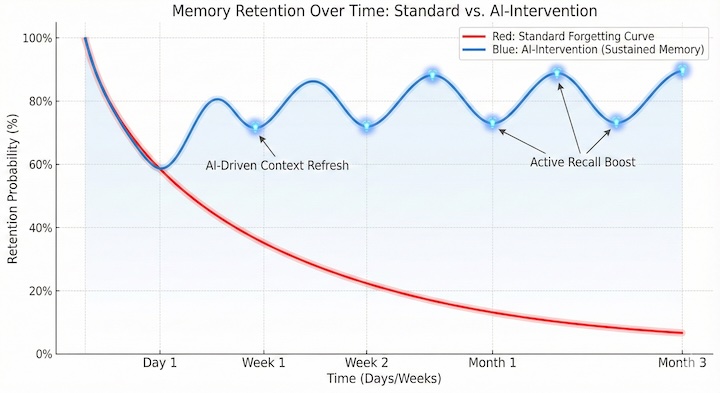
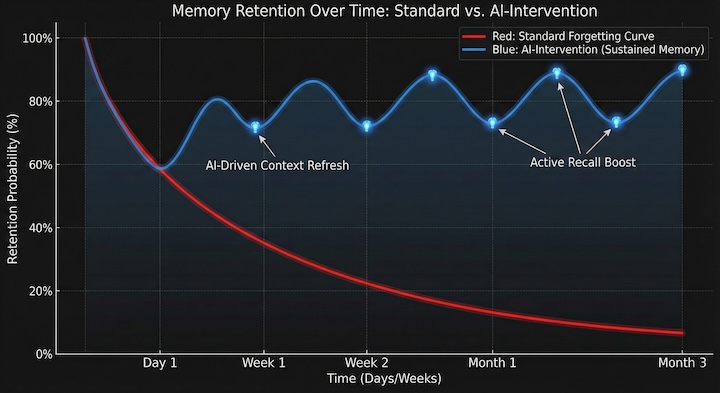
We've been revisiting how vocabulary tools handle the "forgetting curve." Ever since Hermann Ebbinghaus studied memory decay, the EdTech industry’s default mechanism has been basic Spaced Repetition Systems (SRS). Algorithms like SM-2 schedule review cards around when a learner is statistically likely to forget them.
Traditional SRS has a limitation: it treats human knowledge as binary. You flip a flashcard, click a button, and tell the system you either "Know" it or you "Don't."
Real human cognition is more nuanced. Understanding depends on confidence, context, retrieval speed, pronunciation, and the ability to use the word in a sentence. At Learnastra, we rebuilt the SRS engine around that broader signal.
The Problem with Static Decks
Most vocabulary apps today are static flashcard decks. They show you a word, you guess the definition in your head, and you move on. This mimics passive recognition more than active recall. Recognition is the feeling of seeing a familiar face without producing the name. Recall is the effortful retrieval needed to summon that name mid-conversation.
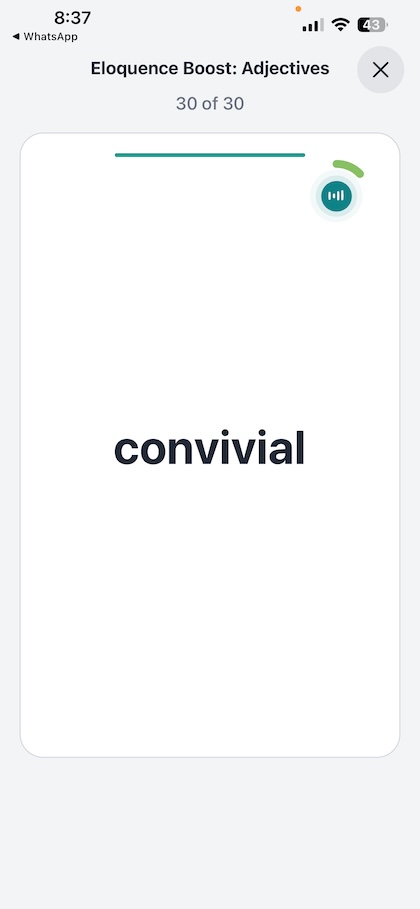
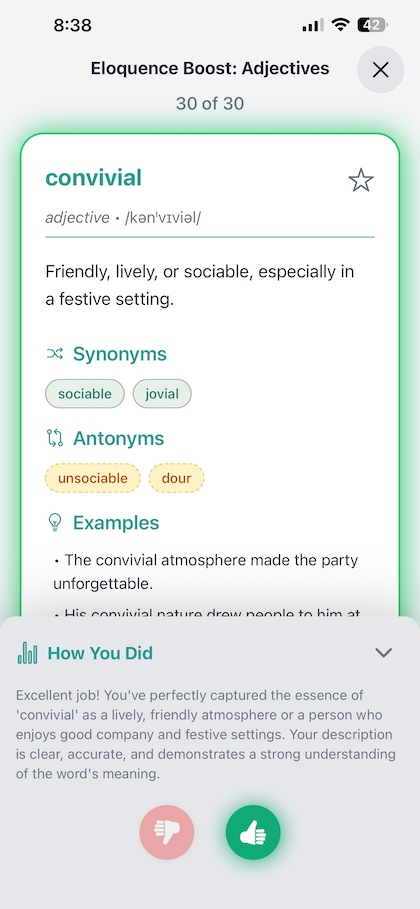
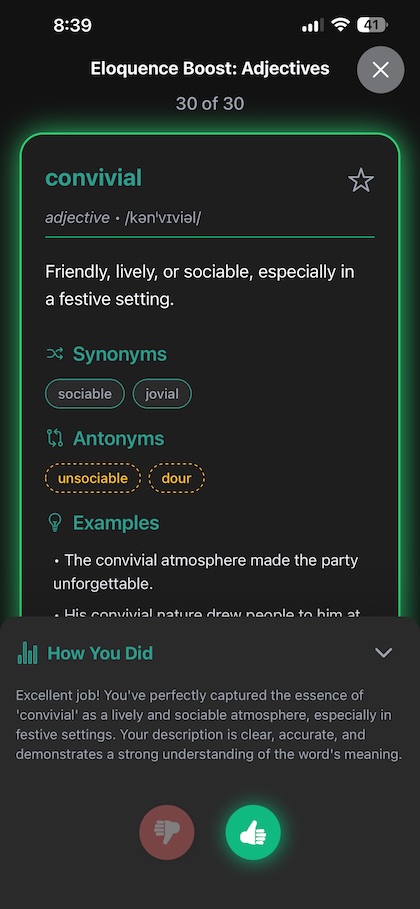
Figure 2: Moving from tap-to-reveal to voice-driven active recall interfaces.
Voice as the Cognitive API
This massive gap in traditional learning is exactly why we built Wordgenie with a voice-first architecture. By forcing the learner to physically speak the definition or deploy the word in a live sentence, we bypass passive lazy-clicking and engage the Broca’s area of the brain. More importantly, the latency of the user's response—the exact hesitation time before the microphone picks up their voice—gives our algorithm infinitely richer data than a generic "Hard/Easy" button press ever could.
If a user stutters or hesitates for 3.5 seconds before answering correctly, a traditional Anki-style app blindly marks it as a success. Our AI models that exact hesitation timeframe as "High Cognitive Load" and dynamically pulls the next review cycle forward. We aren't just optimizing for technically getting the right answer; we are aggressively optimizing for fluency.